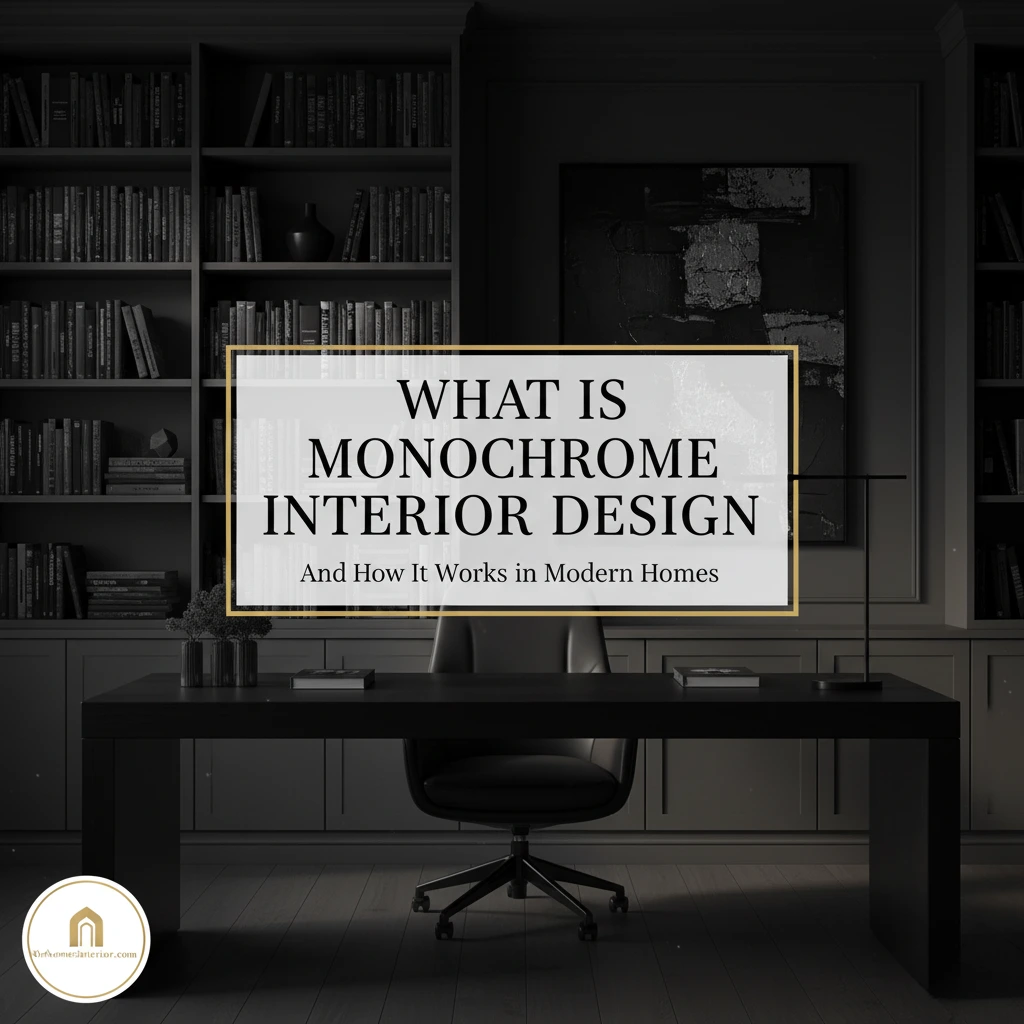
Monochrome interior design is a style that focuses on using a single color family throughout a space to create a cohesive, visually harmonious environment. Rather than relying on multiple hues, it builds depth and interest through tonal variations, textures, and finishes within one dominant color. This approach can be applied to any room and works across a range of aesthetics, from minimalist to luxurious.
By mastering tone layering, material contrast, and strategic accents, you can achieve a look that feels both unified and dynamic. It’s a versatile method that simplifies decision-making while delivering high-impact results.
What Is Monochrome Interior Design?
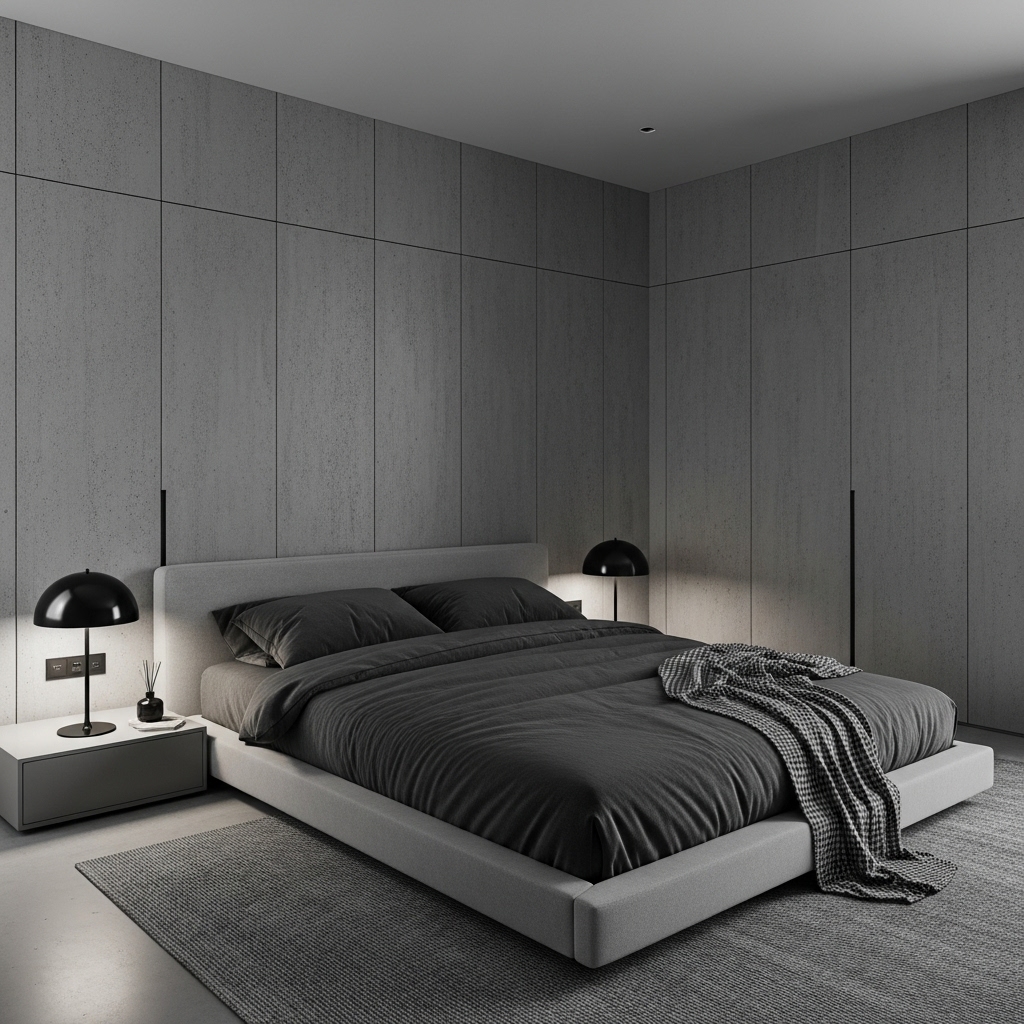
Monochrome interior design is a decorating approach that uses variations of a single color throughout a space. This doesn’t mean everything is the same shade; instead, it’s about layering tones, textures, and finishes within one color family to create a cohesive and visually rich environment.
For example, a monochrome blue room might include navy velvet curtains, powder blue walls, denim-toned cushions, and steel-blue ceramics. The result? A space that feels unified, calming, and sophisticated.
A Brief History
Monochrome design has roots in minimalist and modernist movements, where simplicity and clarity were prized. Designers like Muneeb and Darakhshan championed the “less is more” philosophy, often using monochrome palettes to emphasize form and function.
Today, monochrome is embraced across styles, from Scandinavian serenity to high-glam Hollywood regency.
Core Principles of Monochrome Design
To make monochrome work beautifully, you need more than just color. Here are the key elements:
Tone Variation
Layer light, mid, and deep shades of your chosen color to create visual depth and movement. This tonal contrast prevents flatness and adds dimension, making the space feel more dynamic while staying within a unified palette.
Texture Layering
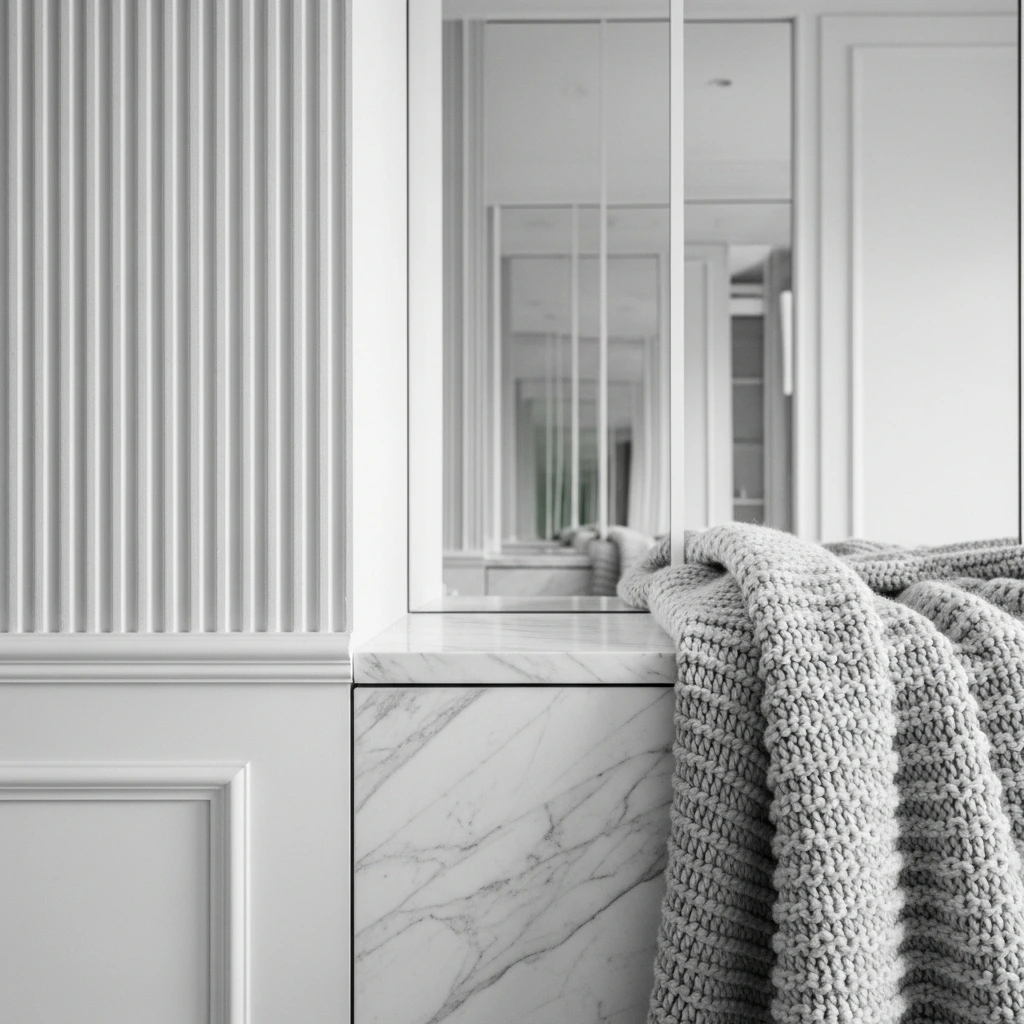
Combine contrasting textures, matte, glossy, soft, hard, and reflective surfaces from mirror interior design to enrich the sensory experience. Mirrors add dimension and brightness, creating a tactile balance that feels polished yet inviting. Mixing materials like velvet, stone, and brushed metal adds complexity and warmth, ensuring your monochrome space feels tactile, inviting, and far from sterile.
Shape and Form
Simplified color highlights architectural features and furniture silhouettes. Use bold forms, curved lines, and sculptural pieces to create visual interest. In monochrome design, shape becomes a key storytelling element that anchors the room’s personality.
Accent Neutrals
Introduce subtle neutrals like white, black, or metallics to break monotony and enhance contrast. These accents act as visual punctuation, helping your primary color stand out while maintaining balance and sophistication across the space.
How to Incorporate Monochrome Interior Design in Your Home
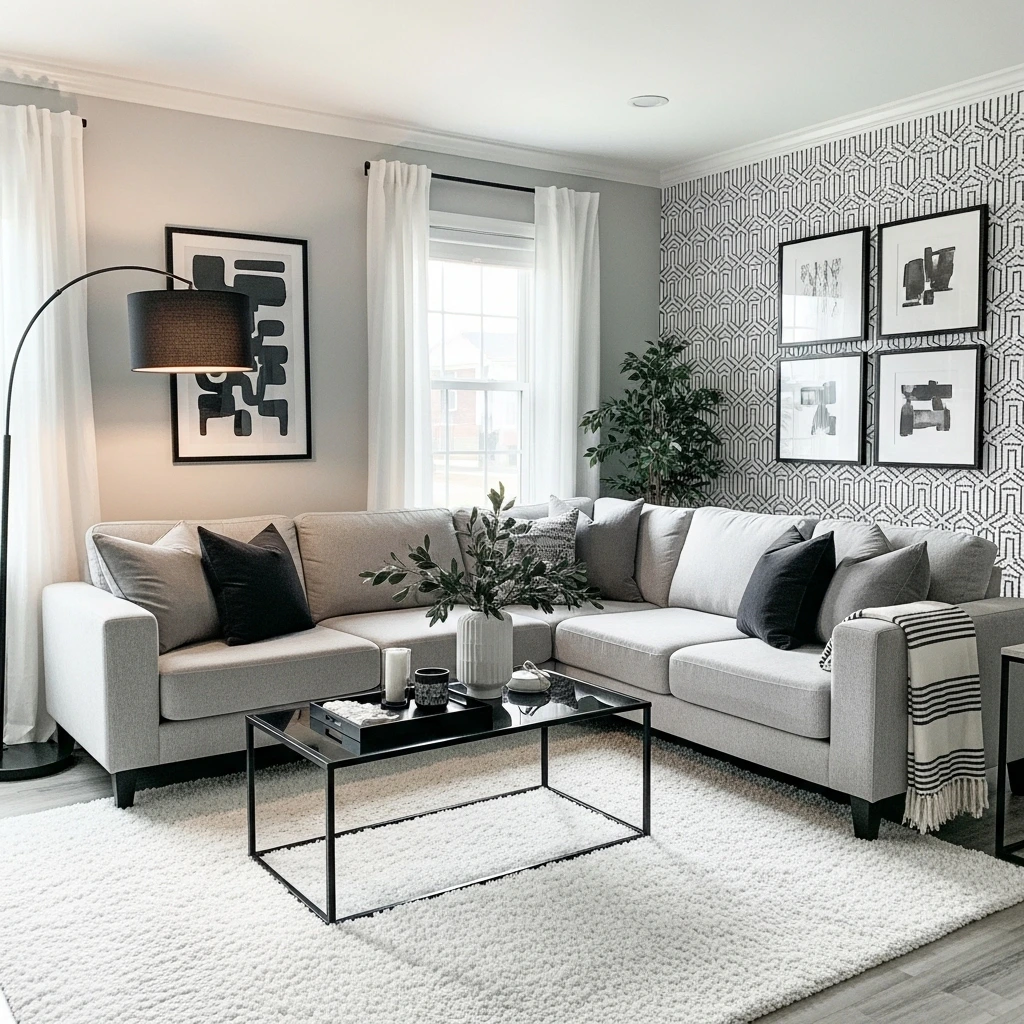
Whether you’re revamping a single room or your entire home, here’s how to bring monochrome to life.
Step 1: Choose Your Color Family
Pick a hue that resonates emotionally. Want calm? Try blue or green. Craving warmth? Go for terracotta or beige. Seeking drama? Black or deep plum might be your muse.
Designer’s Note: Avoid trendy colors unless you truly love them. Monochrome is immersive; make sure it’s a shade you’ll enjoy long-term.
Step 2: Build a Mood Board
Gather inspiration from magazines, Pinterest, or your favorite design blogs. Look for:
- Paint swatches
- Fabric samples
- Furniture styles
- Lighting ideas
This helps you visualize how different tones and textures will interact.
Step 3: Start with Walls and Floors
Paint is your foundation. Choose a base tone and build from there. For floors, consider rugs or tiles that complement your palette.
Pro Tip: Use a slightly lighter or darker shade on trim and moldings to add subtle contrast.
Step 4: Layer Furniture and Textiles
Mix materials like linen, velvet, leather, and wood, all within your chosen color palette, to create tactile richness and visual depth. Varying textures prevent monotony, add warmth, and help your monochrome space feel curated rather than flat.
Step 5: Add Art and Accessories
Choose accessories, artwork, vases, books, and lighting that reinforce your color story without overwhelming it. Metallic finishes like brass, chrome, or matte black add contrast and sophistication, enhancing the palette while keeping the overall look cohesive and intentional.
Step 6: Edit Ruthlessly
Monochrome design demands discipline. Remove or relocate items that clash with your palette or dilute the visual impact. Editing ensures clarity, preserves harmony, and allows each element to contribute meaningfully to the room’s overall aesthetic.
Common Pitfalls to Avoid
Even seasoned designers can stumble. Here’s what to watch out for:
- Too much sameness: If everything is the same tone, the room can feel dull. Use tonal variation.
- Ignoring lighting: Natural and artificial light can dramatically shift how colors appear. Test swatches in different lighting conditions.
- Over-accessorizing: Clutter breaks the monochrome spell. Keep accessories intentional and minimal.
Frequently Asked Questions
Can I use patterns in monochrome design?
Absolutely! Patterns like stripes, geometrics, or florals work beautifully, as long as they stay within your color family.
Is monochrome suitable for small spaces?
Yes. In fact, it can make small rooms feel larger and more cohesive. Lighter tones tend to open up a space, while darker ones add intimacy.
What’s the difference between monochrome and minimalist design?
Monochrome refers to color use, while minimalist design focuses on simplicity and function. You can have a maximalist monochrome room or a minimalist one; it’s all about how you style it.
Can I mix monochrome with other styles?
Definitely. Monochrome pairs well with industrial, bohemian, mid-century modern, and even traditional aesthetics. It’s a versatile foundation.