You’ve finally carved out a beautiful backyard, lush grass, a cozy patio, maybe even a fire pit. But then comes the trampoline. It’s fun, yes, but it sticks out like a sore thumb. Bulky, towering, and often surrounded by safety nets that clash with your landscaping. If you’ve ever wondered, can you put a normal trampoline in the ground to make it safer and more visually appealing? You’re not alone.
This question comes up often among design-conscious homeowners and DIY enthusiasts. The idea of an in-ground trampoline is appealing for many reasons: it’s safer, sleeker, and blends beautifully into outdoor spaces. But is it possible to do this with a standard above-ground trampoline?
Can You Put a Normal Trampoline in the Ground?
Yes, you can, but it requires careful planning and modification. Standard trampolines are designed for above-ground use, which means they lack the built-in support and corrosion resistance that true in-ground models offer. However, with the right approach, you can retrofit a normal trampoline into a recessed setup that’s both safe and stylish.
Why Homeowners Choose In-Ground Trampolines
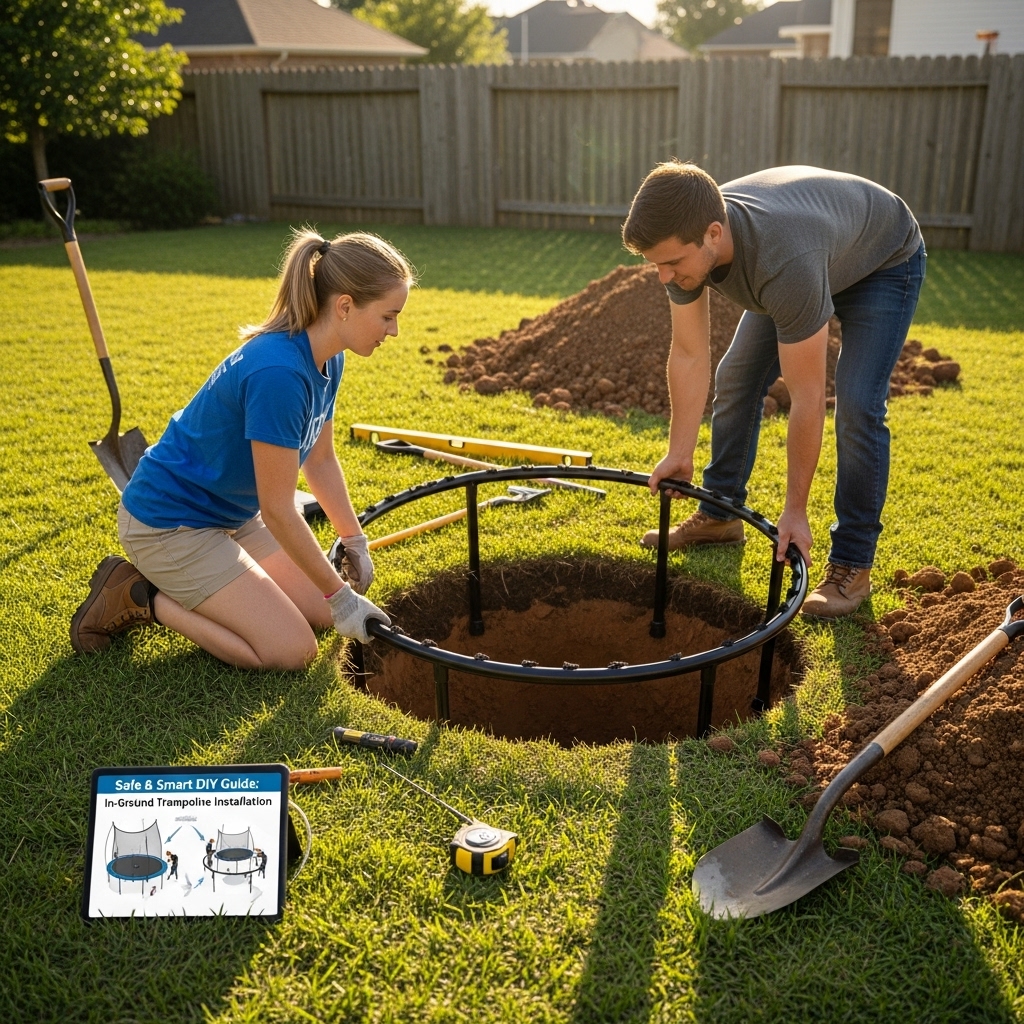
- Safety: Reduced fall height means fewer injuries.
- Aesthetics: A flush design integrates better with landscaping.
- Accessibility: Easier for kids and adults to climb on and off.
Designer’s Note: If your backyard is part of a curated landscape, an in-ground trampoline can feel like a natural extension of your design, rather than a visual disruption.
Tools & Materials You’ll Need
Before you start digging, gather the essentials:
- Shovel or mini excavator
- Tape measure and level
- Retaining wall blocks or a galvanized steel ring
- Drainage gravel and landscape fabric
- Anti-rust spray or sealant
- Safety pads and edge covers
- Your existing trampoline frame and mat
Step-by-Step Guide to Installing a Normal Trampoline in the Ground
1. Choose the Right Location
Pick a flat, open area away from trees, fences, or underground utilities. You’ll need enough clearance around the trampoline for safe jumping and maintenance access.
2. Measure and Mark the Pit
Measure the diameter of your trampoline and mark out a circle slightly larger than the frame. This extra space allows for airflow and drainage.
3. Excavate the Hole
Dig a pit deep enough to accommodate the trampoline frame and allow for airflow beneath the mat. Most standard trampolines require a depth of 2.5 to 3 feet. Use a level to ensure the base is even.
Pro Tip: Sloping the bottom slightly toward a drainage trench helps prevent water buildup.
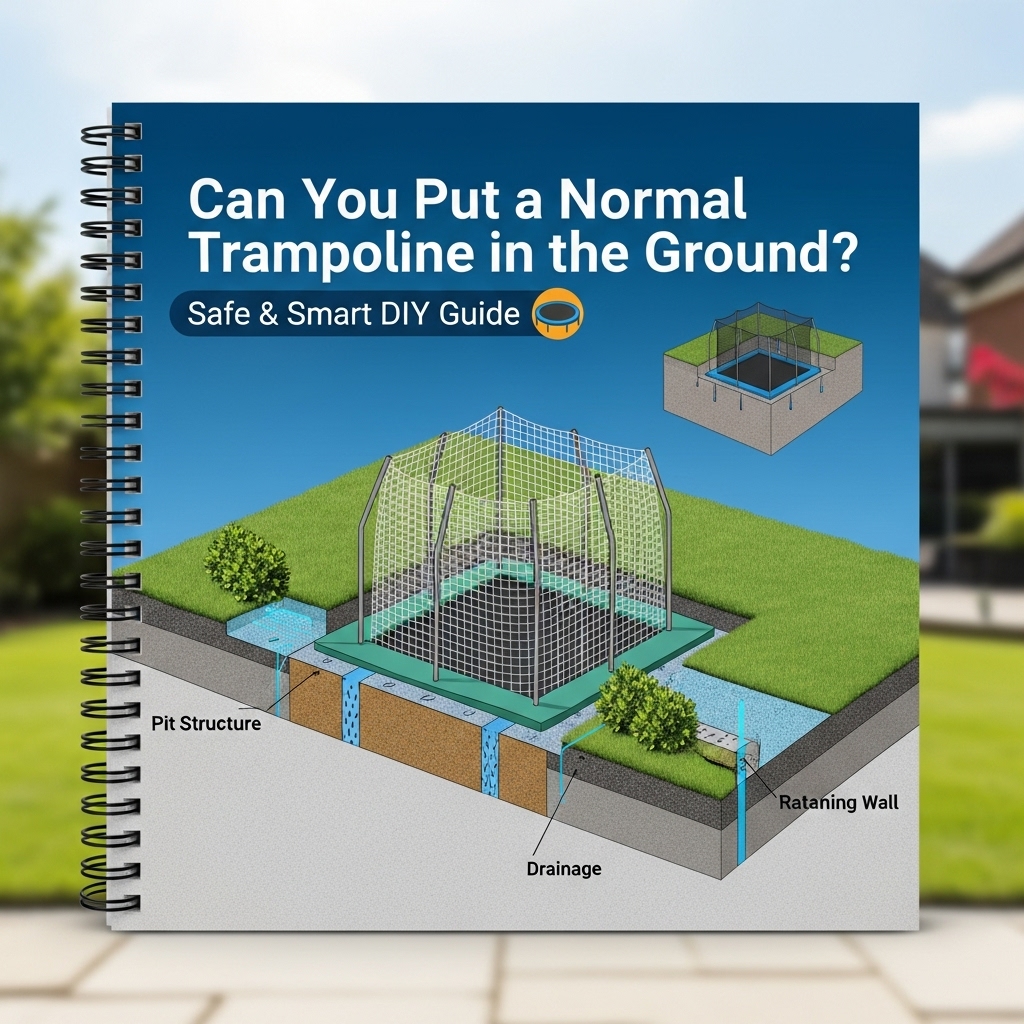
4. Install Drainage
Lay landscape fabric across the entire pit base, then add several inches of drainage gravel. This setup prevents water buildup, reduces rust risk, and ensures long-term structural integrity for your in-ground trampoline installation.
5. Build a Retaining Wall
Use interlocking retaining wall blocks or a galvanized steel ring to reinforce the pit perimeter. This stabilizes surrounding soil, prevents erosion or collapse, and keeps your trampoline securely positioned for safe, long-term use.
6. Modify the Frame (If Needed)
Depending on your trampoline model, you may need to shorten the legs or reinforce the frame. Apply anti-rust spray to exposed metal to prevent corrosion and ensure durability in underground conditions.
7. Secure and Pad the Edges
After placing the trampoline, install thick safety pads around the perimeter. This cushion’s impact zones enhance visual appeal and ensure a safer jumping experience for kids and adults alike.
Common Pitfalls to Avoid
Poor Drainage Planning
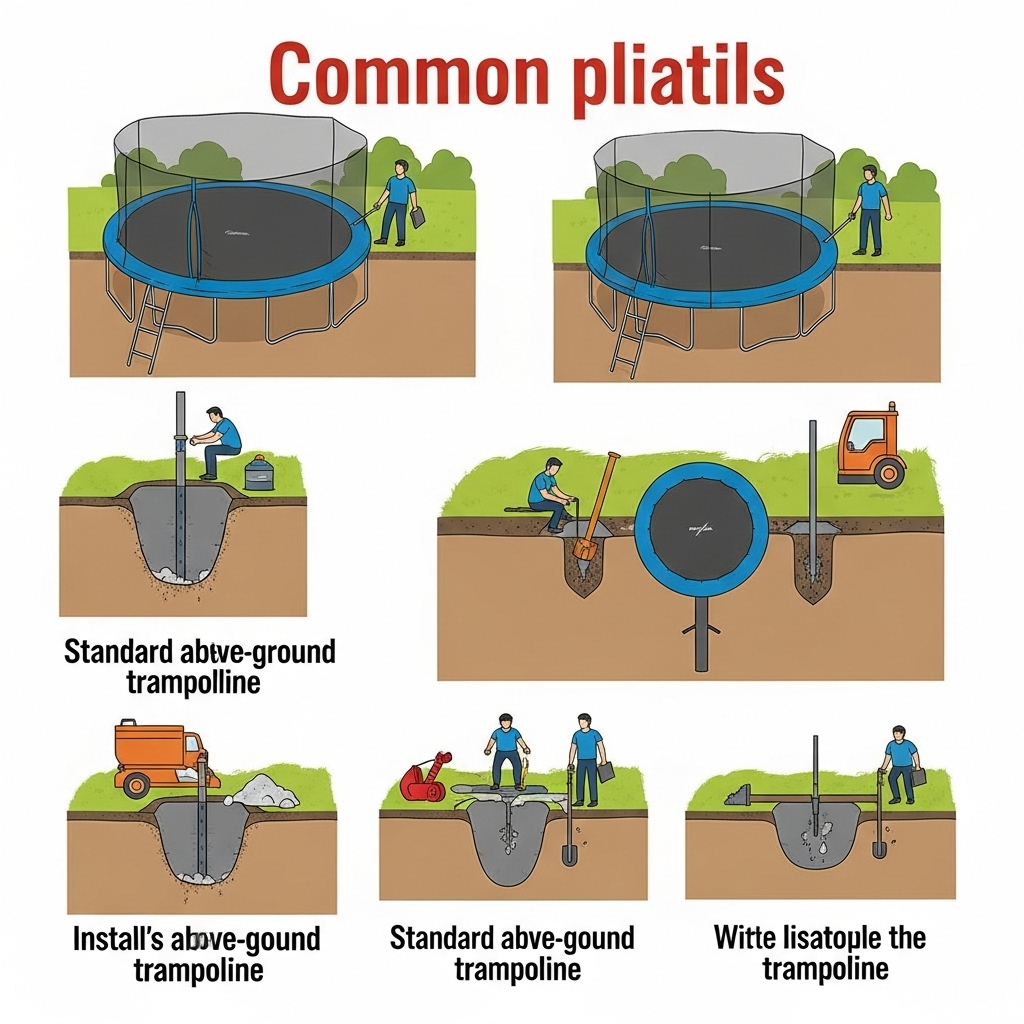
Water accumulation is the number one issue with in-ground trampolines. Without proper drainage, your trampoline can rust, sink, or become a breeding ground for mosquitoes.
Skipping the Retaining Wall
The soil around your pit will shift over time. Without a retaining structure, you risk collapse, uneven surfaces, and long-term instability.
Using the Wrong Trampoline
Not all trampolines are suitable for in-ground use. Lightweight frames may warp or buckle under soil pressure. Always check the manufacturer’s specs before proceeding.
Frequently Asked Questions
Do I need a special trampoline for in-ground installation?
Not necessarily. You can use a standard trampoline, but it must be modified and properly supported. In-ground models are built for this purpose and may offer better durability.
How much does it cost to put a trampoline in the ground?
Expect to spend between $500 and $2,000, depending on whether you DIY or hire professionals. Costs include excavation, drainage, retaining materials, and safety padding.
Will burying a trampoline void its warranty?
In many cases, yes. Most manufacturers design trampolines for above-ground use. Check your warranty terms before making modifications.
Can I install an in-ground trampoline on a slope?
It’s possible, but more complex. You’ll need to level the pit and reinforce one side more heavily. Professional help is recommended for sloped installations.
A Safer, Sleeker Backyard Awaits
Putting a normal trampoline in the ground is absolutely doable, and when done right, it’s a game-changer for both safety and style. With proper planning, drainage, structural support, and thoughtful finishes like outdoor wallpaper or stone veneer, you can transform a bulky eyesore into a seamless part of your backyard design.
Here’s what to remember:
- Yes, you can put a normal trampoline on the ground, but it requires thoughtful modification.
- Drainage and support are non-negotiable for safety and longevity.
- Aesthetics matter, pad the edges, choose a clean location, and integrate it into your landscape.
Ready to elevate your backyard design? Whether you’re a DIY enthusiast or working with a pro, this project can bring both joy and visual harmony to your outdoor space.
Have you tried integrating play equipment into your landscape design? Share your ideas or questions in the comments below. We’d love to hear how you’re making your space both fun and beautiful.