You know that spare bedroom, the one that’s become a catch-all for laundry baskets, old furniture, and forgotten hobbies? Now imagine walking into that same space and seeing rows of neatly hung clothes, drawers that glide open, and lighting that makes every outfit feel like a moment. That’s the magic of turning a bedroom into a closet.
This transformation isn’t just about luxury; it’s about reclaiming space, simplifying your routine, and creating a sanctuary that reflects your style. But before you begin, it’s important to understand the cost to turn a bedroom into a closet. From custom cabinetry to lighting and labor, knowing the cost to turn a bedroom into a closet helps you plan wisely and design a space that fits both your budget and your vision.
What Does It Cost to Turn a Bedroom Into a Closet?
Budget Ranges and What They Include
The cost varies widely depending on your goals, materials, and whether you go DIY or hire professionals. Here’s a general idea:
- Budget-friendly ($1000–$3000+): Modular systems, basic shelving, minimal construction
- Mid-range ($3500–$8000+): Semi-custom cabinetry, lighting upgrades, minor carpentry
- High-end ($10000 -$25000+): Custom built-ins, luxury finishes, seating, mirrors, and lighting design
What Drives the Price?
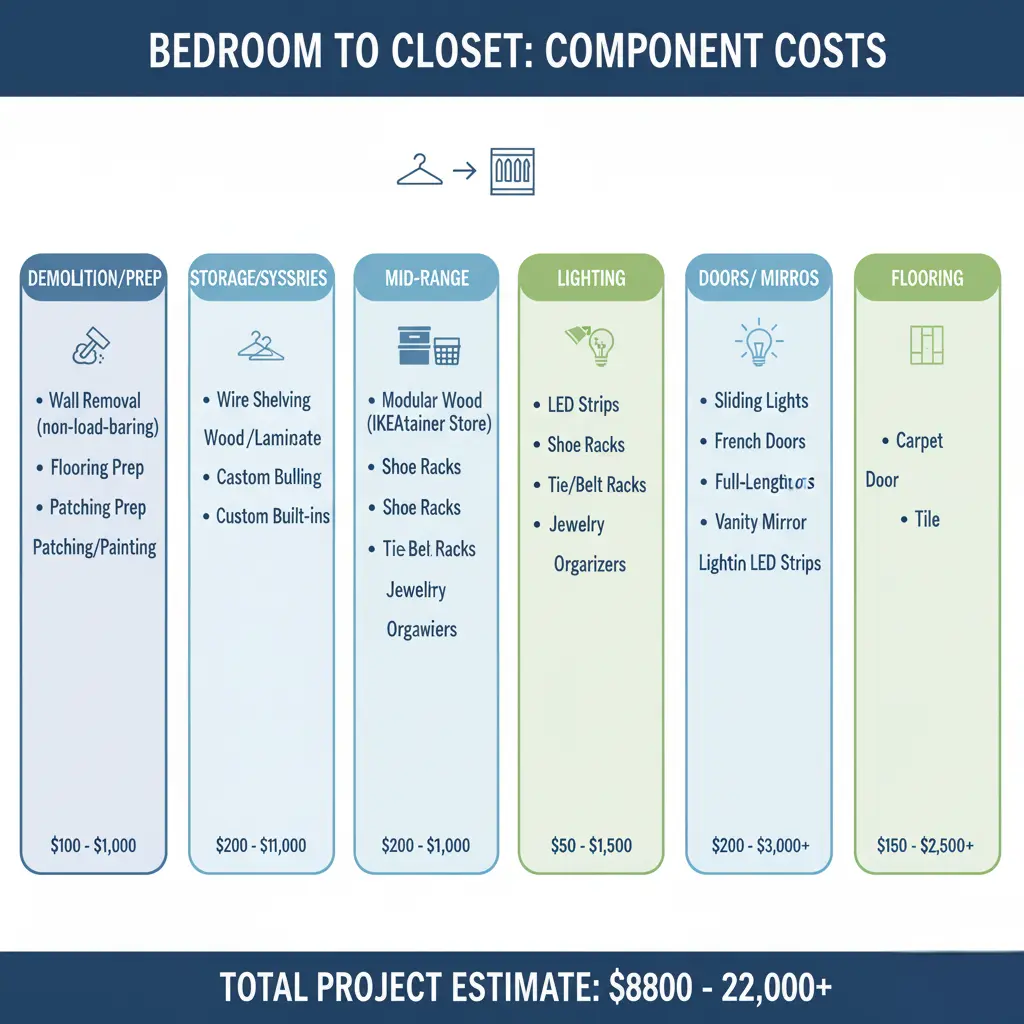
Several factors influence your total spend:
- Closet system type: Modular kits are affordable; custom-built-ins require skilled labor.
- Room size and layout: Larger or irregular spaces demand more materials and design work.
- Construction and electrical: Removing walls, rewiring, or adding outlets increases costs.
- Finishes and accessories: Mirrors, seating, hardware, and décor can add thousands.
Designer’s Note: If your home has fewer than four bedrooms, consider reversible designs to preserve resale value. Avoid removing windows or sealing off doors unless necessary.
How to Save Money Without Sacrificing Style
You don’t need a celebrity budget to create a stunning closet. The secret lies in thoughtful planning and strategic choices.
Start by repurposing furniture you already own. A vintage dresser can become a statement piece, while bookshelves can be reimagined as shoe storage. Modular systems, such as IKEA PAX or The Container Store’s Elfa, offer flexibility and affordability, especially if you’re comfortable with DIY installation.
Shopping secondhand is another smart move. Mirrors, benches, and lighting fixtures can be sourced affordably from local thrift stores or online marketplaces. And don’t underestimate the power of paint or wallpaper; these affordable upgrades can instantly elevate the room’s ambiance.
Pro Tip: Invest in high-quality hardware, such as drawer pulls and rods. These small upgrades elevate the entire space without breaking the bank.
Step-by-Step Guide to Planning Your Closet Conversion
1. Assess the Room
Measure the space, note the ceiling height, and consider window placement. Identify existing outlets, vents, and lighting fixtures. This helps you understand what’s possible before diving into design.
2. Define Your Needs
Before diving into layout or materials, take a moment to assess your wardrobe and lifestyle. Do you need more hanging space for dresses and suits, or drawers for folded items and accessories? Will this be a shared closet or a personal retreat? Consider whether you want a vanity, seating area, or full-length mirror. These decisions will shape your layout, budget, and overall design direction.
3. Create a Layout
Once your needs are clear, sketch a layout that divides the room into functional zones. Allocate space for hanging clothes, folded garments, shoes, and accessories. Include a mirror and seating if space allows. Think about how you move through the room and ensure each zone is accessible. Use free online tools or consult a designer to refine your plan and avoid common layout mistakes.
4. Choose Your Closet System
Your closet system determines both the look and cost of your conversion. Modular kits are ideal for budget-conscious DIYers. They’re flexible and easy to install. Custom cabinetry offers a seamless, built-in finish but requires professional help and a larger investment. Consider how much customization you need and how your system will integrate with the room’s dimensions and style.
5. Plan Lighting
Lighting is essential for both function and ambiance. Natural light is a bonus, but most closets need task lighting to ensure visibility. Consider LED strips under shelves, recessed lighting for a clean look, or a statement chandelier for drama. Good lighting helps you see your wardrobe clearly and elevates the overall mood of the space.
6. Add Finishing Touches
With the structure in place, it’s time to personalize. Paint or wallpaper sets the tone: bold, soft, or neutral. Rugs add warmth and comfort, while mirrors expand the space visually. Small details like drawer pulls, hooks, and trays bring character and cohesion. These finishing touches turn your closet into a curated, inspiring environment.
7. Hire Professionals (If Needed)
If your project involves structural changes, electrical work, or custom cabinetry, hire licensed professionals. They’ll ensure everything is safe, compliant, and built to last. Always check local building codes before starting, and get multiple quotes to find the right fit. Professional help can prevent costly mistakes and elevate the final result, especially when working with an experienced interior design business that understands both aesthetics and structural requirements.
Frequently Asked Questions
Can I turn a bedroom into a closet without removing walls?
Yes. Freestanding systems and modular units allow you to create a closet without demolition, making it ideal for renters or reversible setups.
Will this hurt my home’s resale value?
If your home has four or more bedrooms, the impact is minimal. For smaller homes, opt for non-permanent conversions to maintain flexibility.
How long does the conversion take?
A DIY setup can be completed in a weekend. Custom builds may take 2–4 weeks, depending on the scope and contractor availability.
Do I need a permit?
Usually not, unless you’re making structural changes or electrical upgrades. Always check with your local building authority.
Your Closet, Your Sanctuary
Turning a bedroom into a closet is more than a renovation; it’s a lifestyle upgrade. With thoughtful planning, you can create a space that simplifies your mornings, showcases your wardrobe, and adds a touch of everyday luxury.
Here’s what to remember:
- Costs range from $1,000 to $25,000+
- Modular systems offer flexibility and affordability
- Custom builds deliver luxury and precision
- Smart layout and repurposing can save thousands
Ready to reclaim that spare room? Whether you’re sketching ideas or hiring a pro, your dream closet is closer than you think.
What would your dream closet include shoe wall, an island, or a glam station? Share your vision in the comments below!