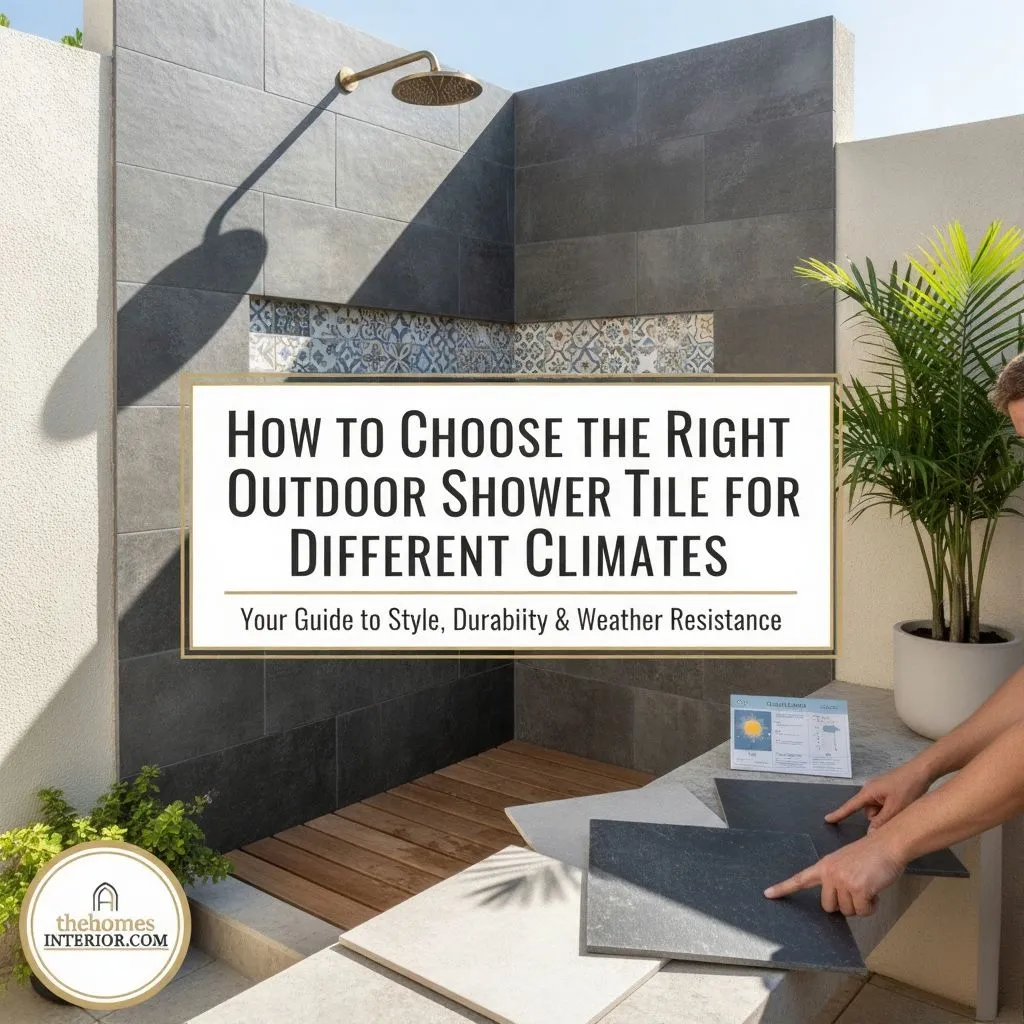
Imagine stepping into your outdoor shower on a crisp morning, only to find the tile surface dangerously slick, or worse, cracked from last winter’s frost. Choosing the right outdoor shower tile isn’t just about style; it’s about survival. Climate plays a pivotal role in how tiles perform, age, and protect your space. From tropical humidity to alpine chill, your environment should guide every design decision.
Tiles that thrive in one region may fail in another. That’s why understanding climate-specific needs is essential, not just for durability, but for safety, comfort, and long-term value.
Understanding Tile Performance Across Climates
Outdoor showers face more environmental stress than indoor ones. Rain, sun, salt, frost, and foot traffic all impact tile integrity. Here’s how climate affects tile selection:
Hot & Humid Climates
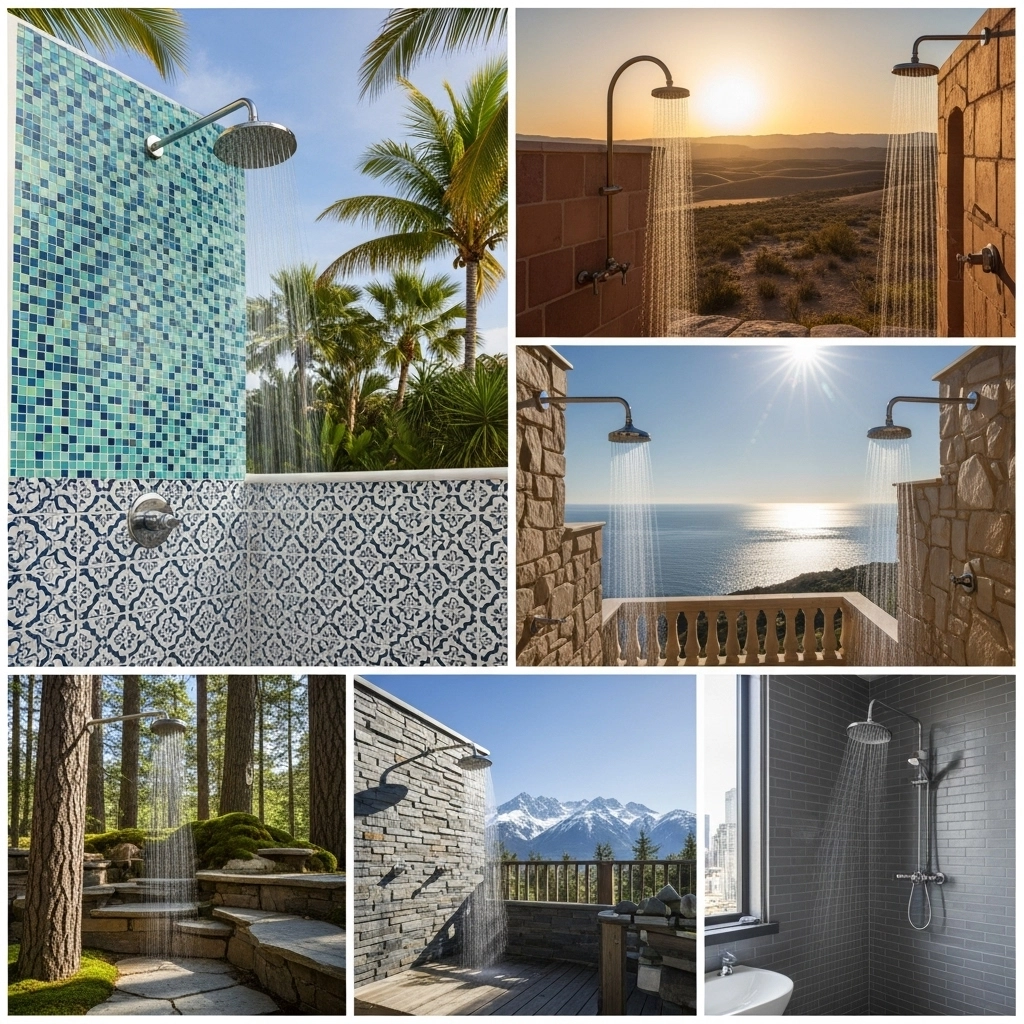
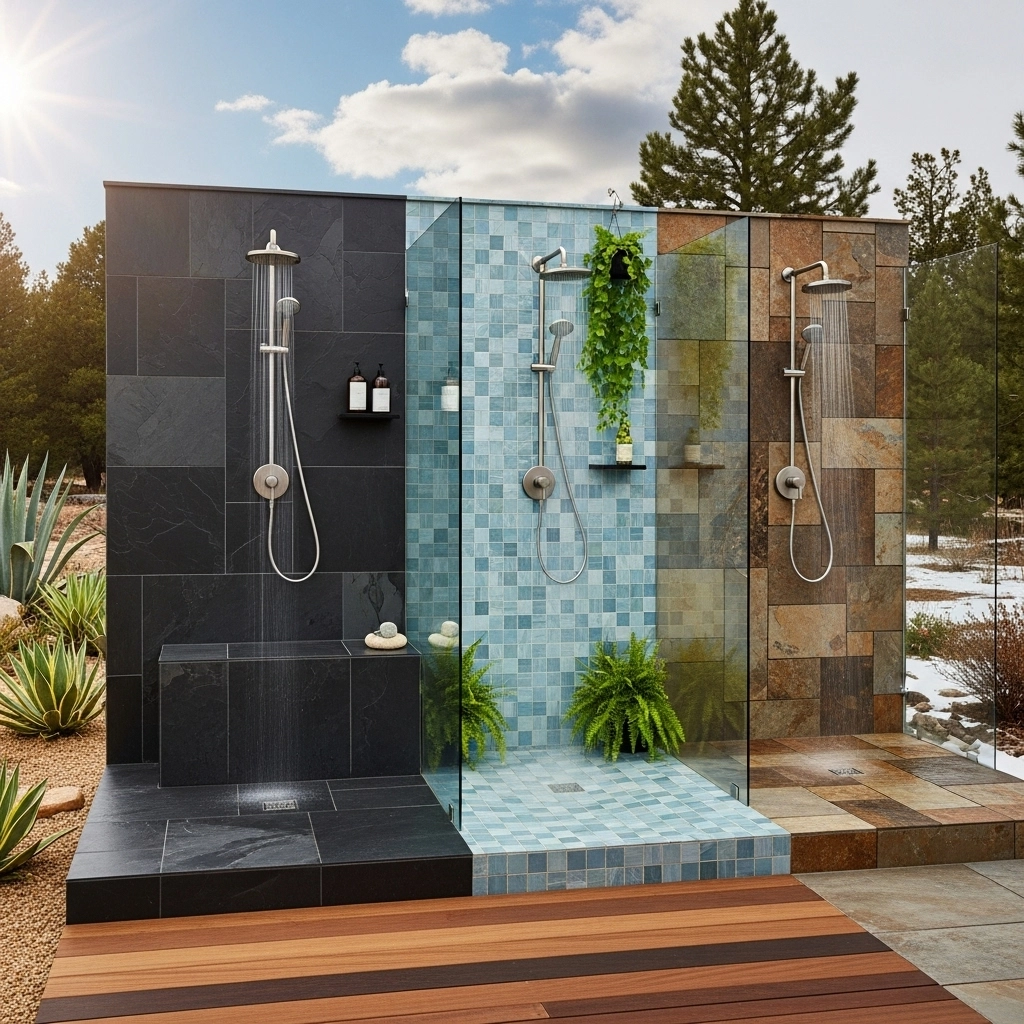
In tropical or coastal regions, moisture is constant. Tiles must resist mold, mildew, and salt corrosion. Porcelain, glazed ceramic, and mosaic tiles are ideal; they’re non-porous, easy to clean, and offer intricate design options that resist mold and mildew. Avoid natural stone unless it’s sealed regularly, as it can absorb moisture and stain.
Designer’s Note: Choose light-colored tiles to reflect heat and keep surfaces cool underfoot.
Cold & Frost-Prone Climates
Freeze-thaw cycles can crack tiles that aren’t frost-resistant. Opt for porcelain tiles rated for outdoor use, with low water absorption. Slate and granite can work if properly sealed, but avoid limestone or travertine; they’re too porous and prone to damage.
Pro Tip: Look for tiles with a PEI rating of 4 or 5 for maximum durability.
Dry & Arid Climates
In desert regions, UV exposure and dust are the main concerns. Tiles should be fade-resistant and easy to rinse. Unglazed porcelain or textured ceramic tiles offer grip and longevity. Avoid glossy finishes; they show dust and can become slippery when wet.
Design Insight: Earth tones and matte finishes blend beautifully with natural surroundings.
Key Factors to Consider When Choosing Outdoor Shower Tile
Beyond climate, several technical and aesthetic factors influence your tile choice. Here’s what to prioritize:
- Slip Resistance: Look for tiles with a high COF (Coefficient of Friction). Textured surfaces or anti-slip coatings are essential for safety.
- Water Absorption Rate: Porcelain tiles typically absorb less than 0.5% of water, making them ideal for wet zones.
- UV Resistance: In sunny climates, opt for tiles that won’t fade or discolor over time.
- Maintenance Needs: Choose materials that are easy to clean and resistant to staining, especially in high-humidity areas.
- Style Compatibility: Your tile should complement the surrounding landscape, fixtures, and architectural style.
Best Tile Materials for Outdoor Showers
Porcelain Tile
Frost-resistant and exceptionally durable, porcelain is the gold standard for outdoor shower tile in any climate. Its low water absorption rate makes it ideal for wet zones, while its wide range of styles, from wood-look to stone-effect, offers endless design flexibility.
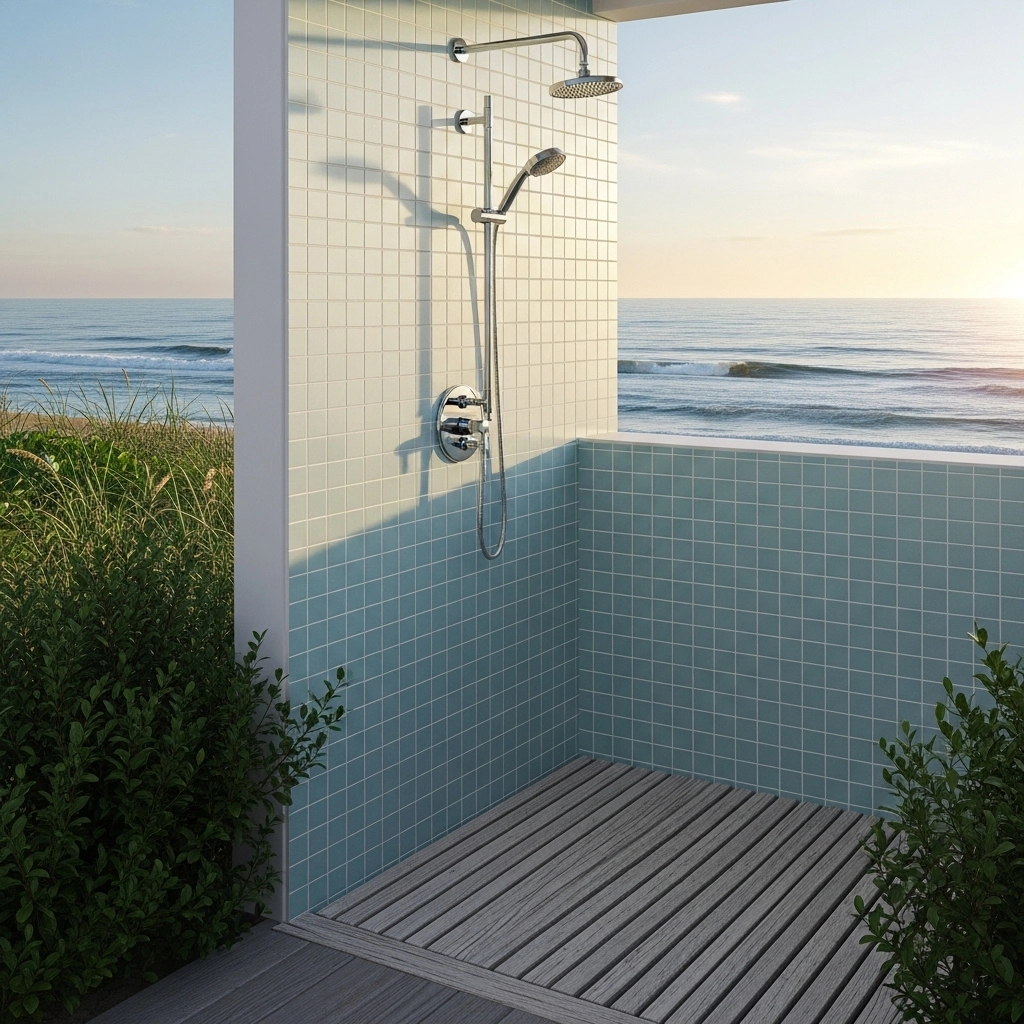
Ceramic Tile
Ceramic tiles are affordable and visually versatile, but they’re best suited for mild climates. Unless specifically rated for outdoor use, they may crack in freeze-thaw conditions or absorb moisture in humid environments. Always check for outdoor-grade certification.
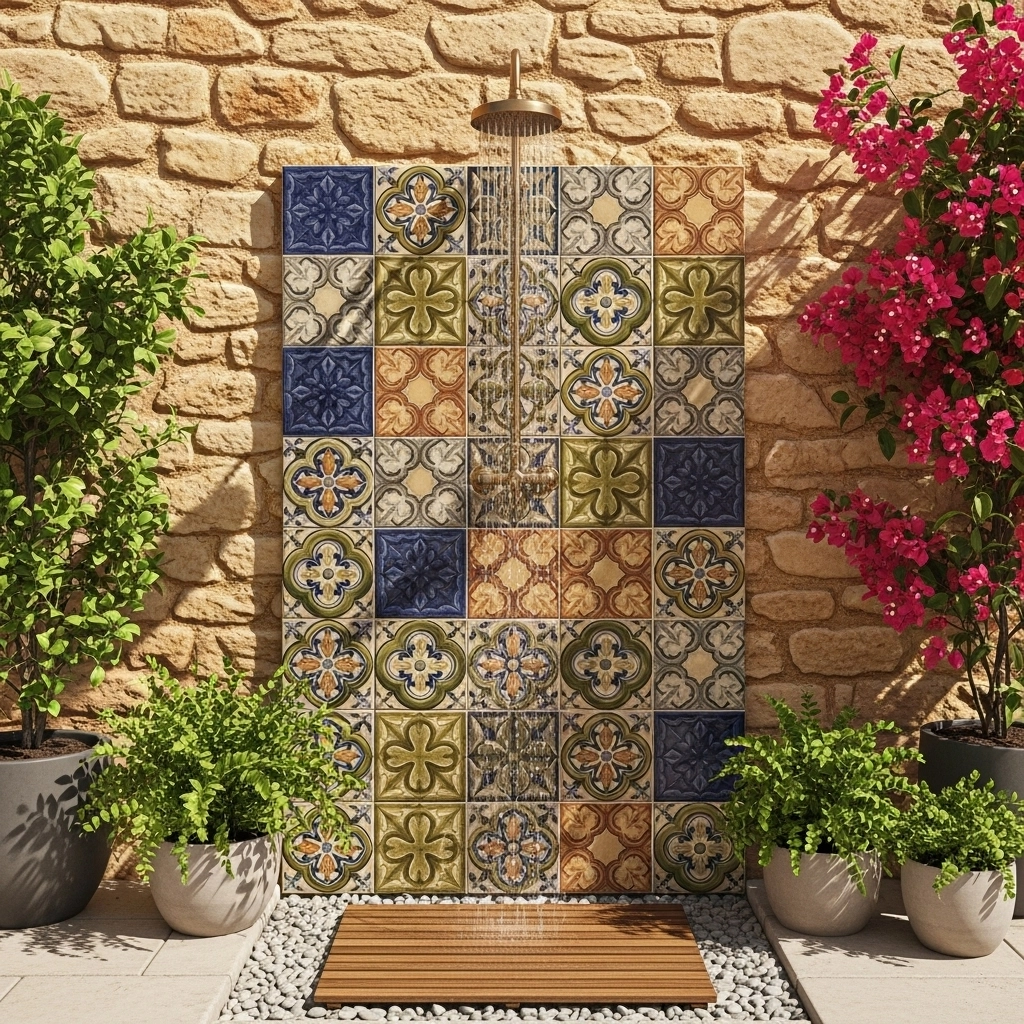
Natural Stone (Slate, Granite, Quartzite)
Natural stone brings organic beauty and timeless texture to outdoor showers. Slate and granite perform well in colder climates when sealed properly, while quartzite offers durability in warmer zones. Regular sealing is essential to prevent staining and erosion.
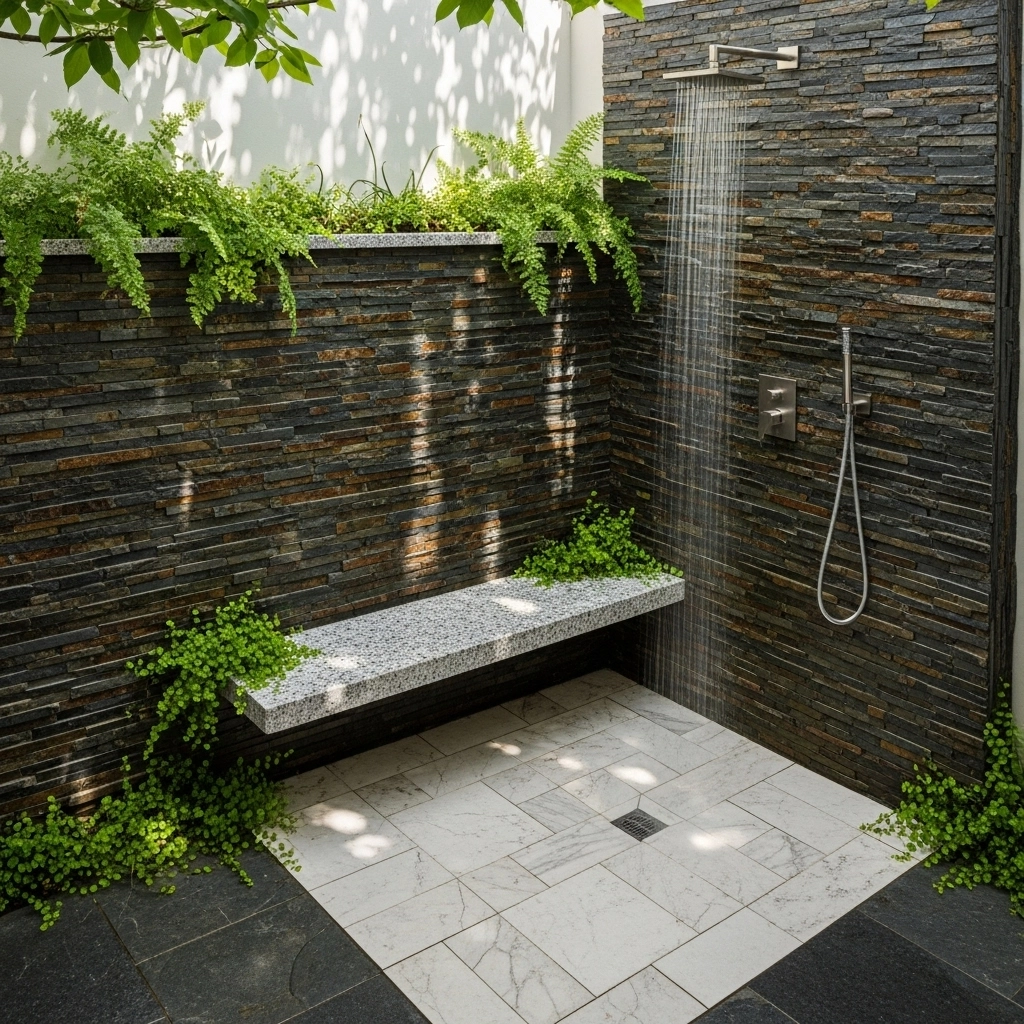
Concrete Tile
Concrete tiles offer a modern, industrial aesthetic with excellent durability in dry climates. They resist UV fading and blend seamlessly with minimalist or desert-inspired designs. In humid or coastal areas, sealing is necessary to prevent moisture damage.
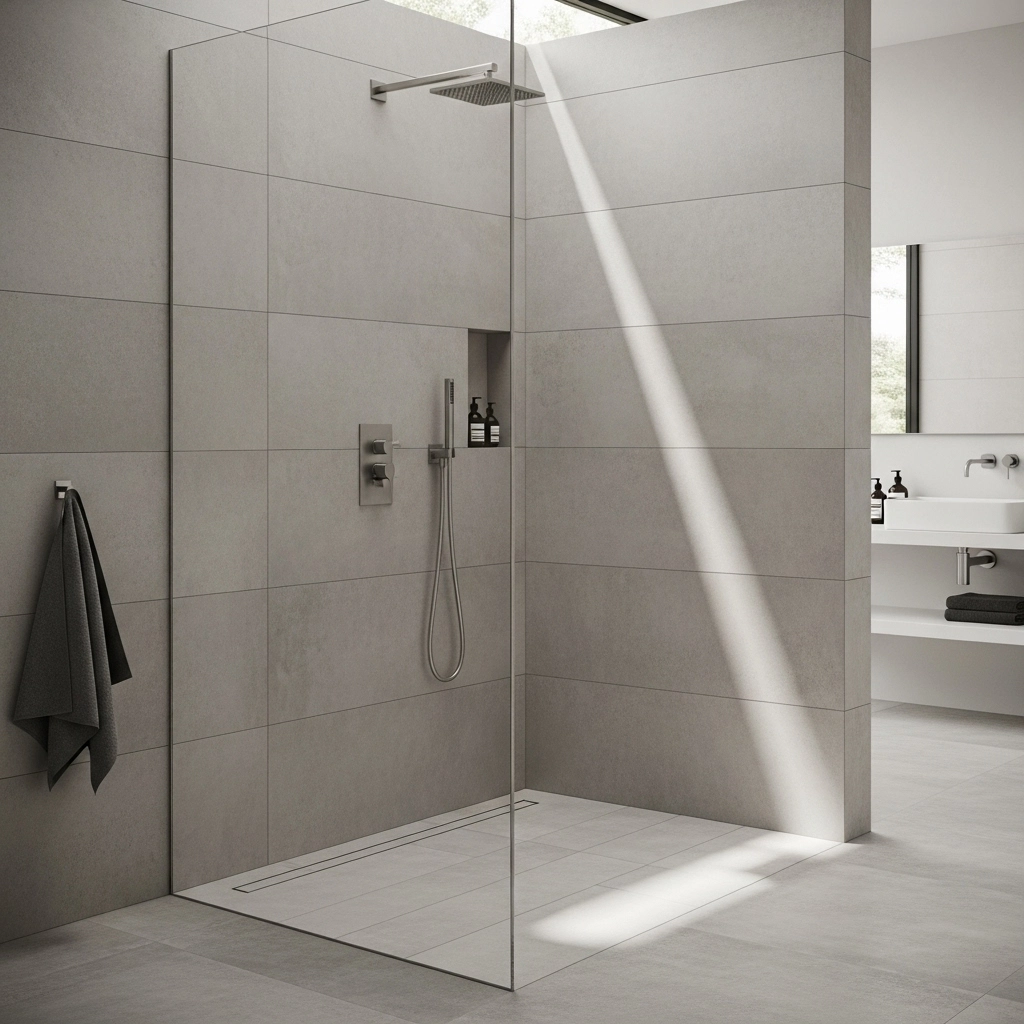
Glass Tile
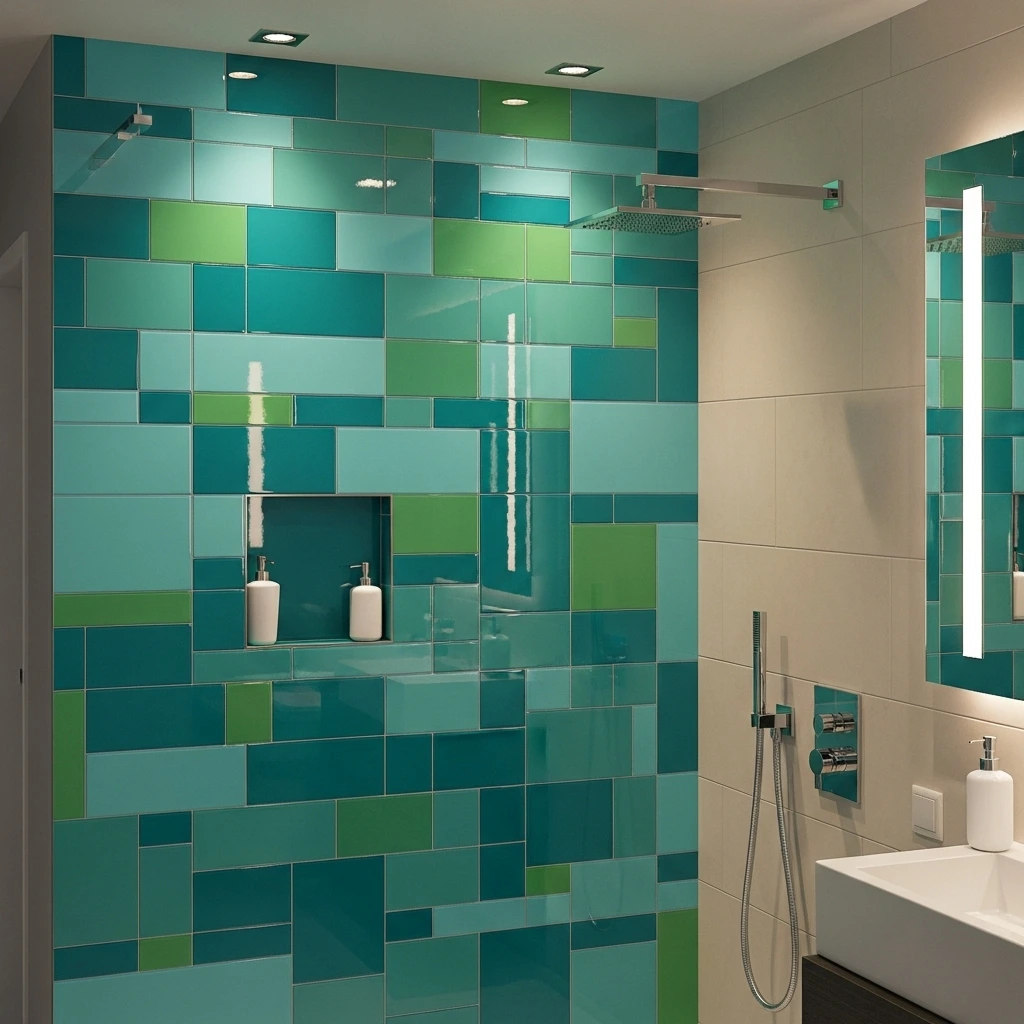
Glass tiles add luminous color and artistic flair, making them perfect for accent walls or niches. However, they can be slippery when wet and are not recommended for flooring in outdoor showers. Use sparingly to enhance visual interest without compromising safety.
How to Match Tile Style with Climate and Architecture
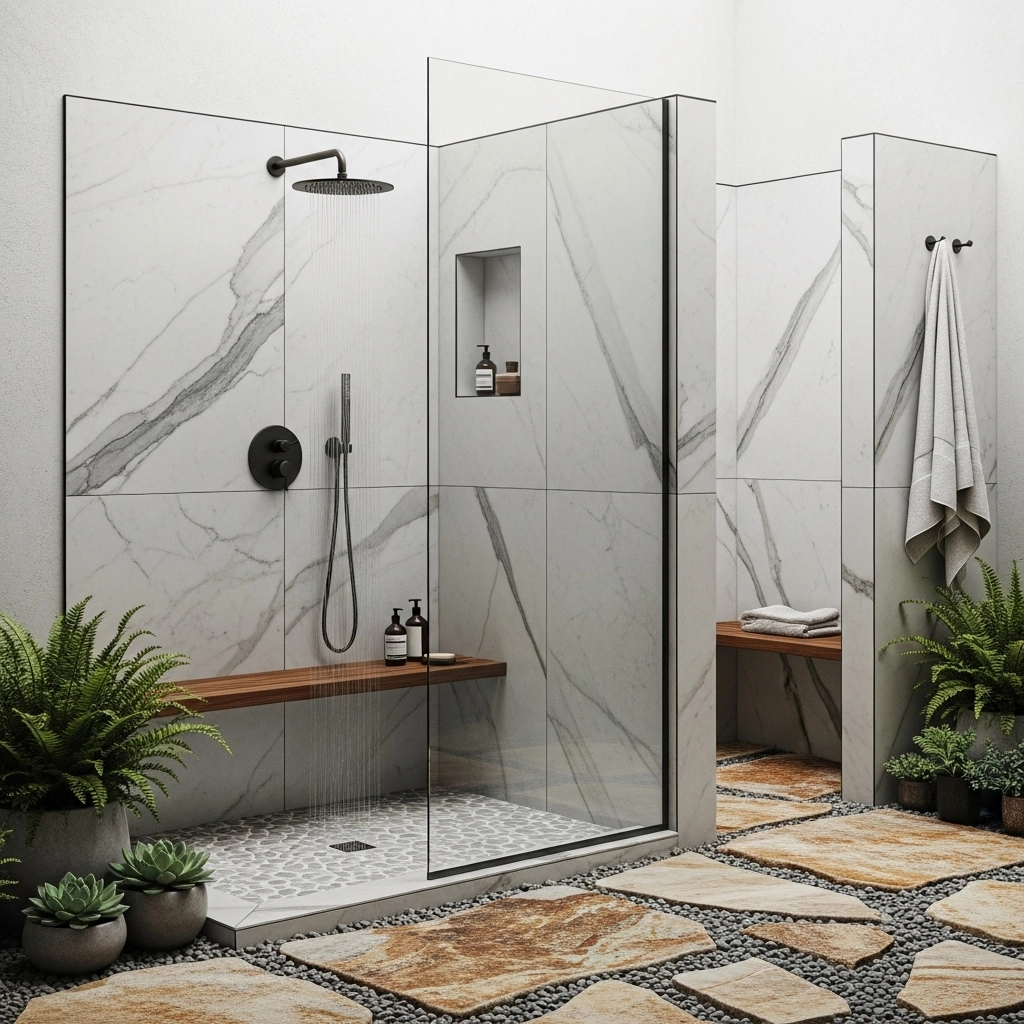
Choosing tile isn’t just technical; it’s emotional. Your outdoor shower should feel like an extension of your home and landscape. In coastal homes, sea-glass hues and pebble textures evoke beachside serenity. In mountain cabins, slate or wood-look porcelain adds rustic warmth. For desert retreats, terracotta tones and geometric patterns reflect the terrain.
Designer’s Note: Always balance form with function. A tile that looks stunning but fails in your climate will cost more in repairs than it’s worth.
Installation Tips for Long-Term Success
Even the best tile won’t last without proper installation. Start with a waterproof membrane to protect the layers beneath from moisture, especially in humid or coastal climates.
Use grout that suits your environment, epoxy for wet zones, and flexible grout for areas with freeze-thaw cycles. This helps prevent cracking and staining over time.
Make sure the shower floor slopes toward the drain to avoid water pooling and mildew. A slight slope makes a big difference in safety and longevity.
If you’re using natural stone, seal it regularly to protect against moisture and preserve its beauty.
Pro Tip: Always work with a professional who understands outdoor installations in your climate. Their expertise ensures your tile performs as beautifully as it looks.
Frequently Asked Questions
Can I use indoor tiles for my outdoor shower?
Only if they’re rated for exterior use. Most indoor tiles lack the durability and slip resistance needed for outdoor conditions.
How often should I seal natural stone tiles?
In humid or coastal climates, seal every 6–12 months. In dry regions, once a year may suffice.
What’s the best tile for barefoot comfort?
Textured porcelain or matte ceramic tiles offer grip without harshness. Avoid sharp edges or overly rough finishes.
Do outdoor shower tiles need special grout?
Yes. Use weather-resistant grout, epoxy for moisture-heavy areas, and flexible grout for freeze zones.
Design That Endures
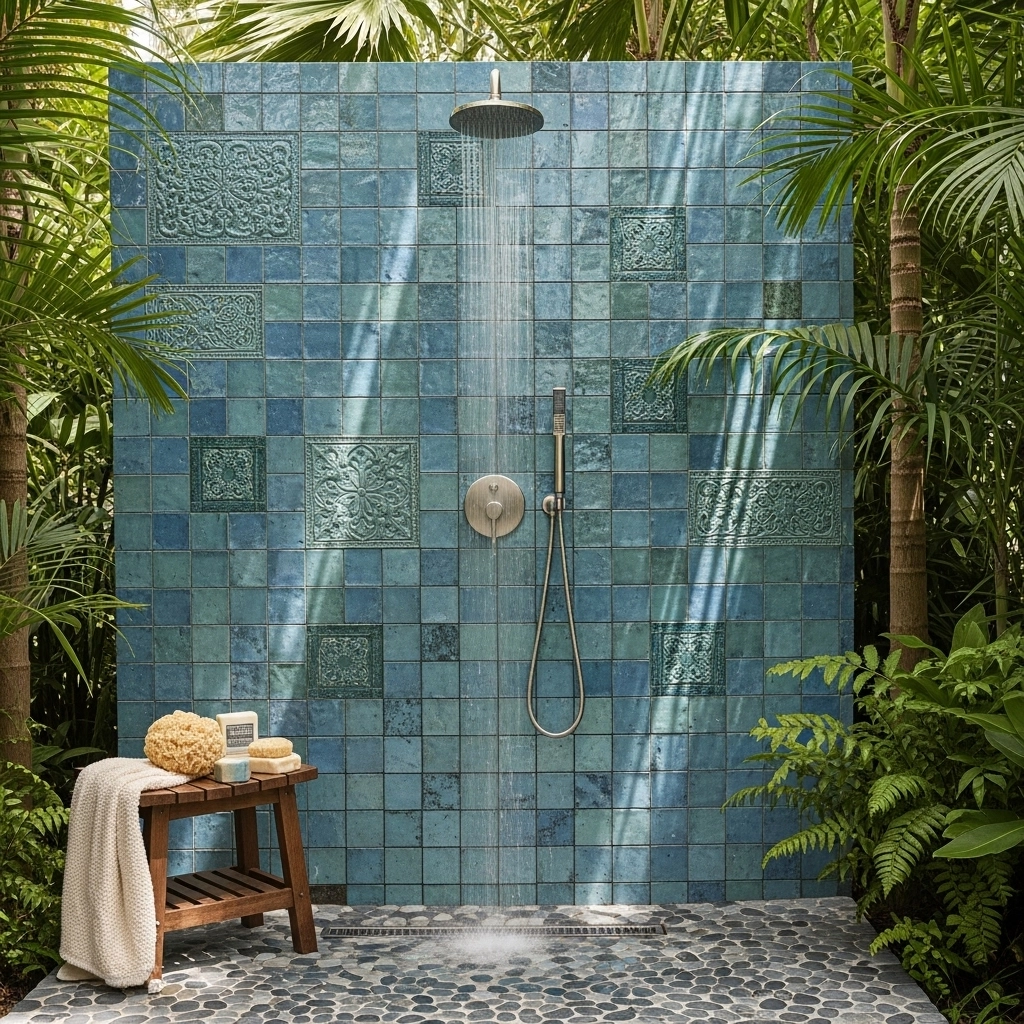
Choosing the right outdoor shower tile isn’t just a design decision; it’s a climate strategy. When you align material, texture, and style with your environment, you create a space that’s not only beautiful but built to last. Whether you’re basking in coastal breezes or braving alpine frost, the right tile turns your outdoor shower into a sanctuary.
So, what climate are you designing for? Share your region and tile ideas in the comments. I’d love to help you refine your vision.