A few years ago, I walked into a client’s newly renovated dining room and immediately felt something was off. The color was perfect, the furniture was exquisite, and the lighting was warm, but the walls? They looked… flat. Lifeless. The culprit? A high-gloss paint finish on a wall that begged for softness. That moment reminded me of a truth every designer knows but many homeowners overlook: the paint finish can make or break a room.
Choosing between matte, satin, and gloss paint finishes isn’t just about aesthetics; it’s about durability, mood, and how light interacts with your walls. Yet, this decision often gets overshadowed by color selection. Let’s change that.
What Are Paint Finishes?
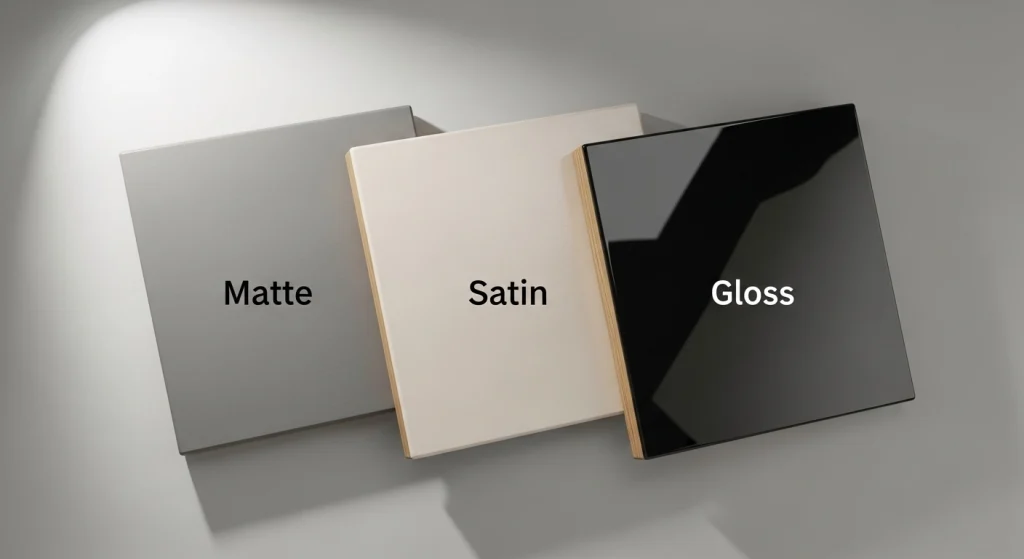
A paint finish refers to the level of sheen or shine a paint has once it dries. It affects not only how the color looks but also how the surface performs over time. Finishes range from ultra-flat to ultra-glossy, and each has its own personality, strengths, and ideal applications.
Think of it like fabric: matte is your cozy linen, satin is your versatile cotton blend, and gloss is your sleek silk.
The Big Three: Matte vs Satin vs Gloss
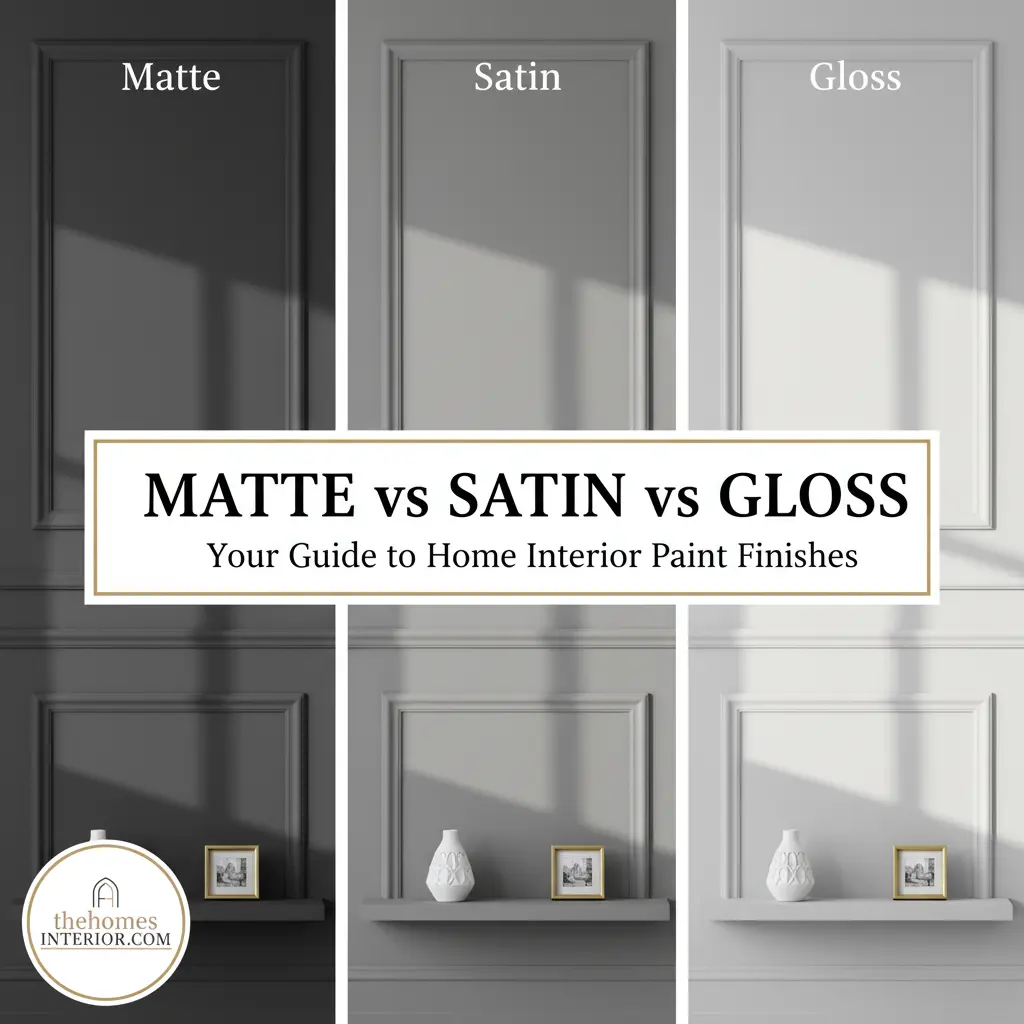
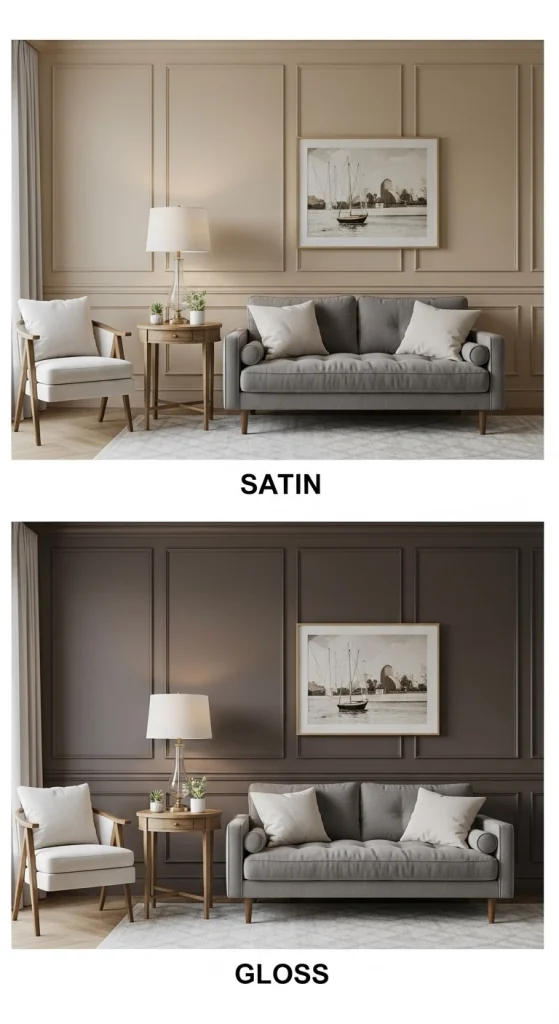
When choosing a paint finish, understanding the differences between matte, satin, and gloss is essential. Each offers a unique sheen level, durability, and aesthetic impact that can dramatically influence your space’s mood, maintenance, and light reflection.
Matte Finish (Also Known as Flat)
Soft, velvety, and non-reflective, perfect for understated elegance.
Best for: Ceilings, adult bedrooms, formal dining rooms, low-traffic areas
- Sheen Level: 0–10%
- Look: Soft, velvety, non-reflective
Pros:
- Hides imperfections beautifully
- Creates a cozy, elegant atmosphere
- Ideal for textured or uneven walls
Cons:
- Harder to clean
- Not ideal for high-traffic or high-moisture areas
Designer’s Tip:
Matte finishes are perfect for creating a moody, sophisticated vibe. I often use them in libraries or master bedrooms where ambiance matters more than durability.
Satin Finish (Sometimes Called Eggshell or Low-Sheen)
A smooth surface with a gentle glow, where beauty meets practicality.
Best for: Living rooms, hallways, children’s bedrooms, kitchens
- Sheen Level: 20–35%
- Look: Smooth with a subtle glow
Pros:
- More durable and washable than matte
- Reflects just enough light to brighten a space
- Balances elegance and practicality
Cons:
- Slightly reveals wall imperfections
- Can show brush strokes if not applied carefully
Designer’s Tip:
Satin is the go-to for most interior walls. It’s the sweet spot between beauty and function, especially in homes with kids or pets.
Gloss Finish (Includes Semi-Gloss and High-Gloss)
Bold and brilliant, ideal for surfaces that demand attention.
Best for: Trim, doors, cabinets, bathrooms, kitchens
- Sheen Level: 50–100%
- Look: Shiny, reflective, crisp
Pros:
- Extremely durable and easy to clean
- Highlights architectural details
- Moisture-resistant for humid areas
Cons:
- Shows every bump and flaw
- Requires meticulous prep work
Designer’s Tip:
Use gloss strategically. A high-gloss black door or lacquered ceiling can be breathtaking only if the surface is flawless.
How to Incorporate These Finishes in Your Home
Now that you know the differences, let’s explore how interior designers strategically use each finish to elevate a space not just visually, but functionally and emotionally. Here’s how to use each finish to its full potential.
1. Create Contrast with Trim and Walls
Pairing matte walls with semi-gloss or gloss trim creates a striking visual contrast that defines architectural elements like baseboards and crown molding. The matte absorbs light for a soft backdrop, while the trim’s sheen adds crispness, elegance, and dimension to the space.
2. Use Satin in Transitional Spaces
Satin paint is ideal for high-traffic areas, such as hallways, stairwells, and entryways. Its subtle sheen reflects light gently, making narrow spaces feel brighter and more open. Plus, it’s durable and easy to clean, perfect for spots prone to scuffs and fingerprints.
3. Go Glossy in Small Doses
Use gloss finishes on:
- Interior doors for a polished look
- Built-in bookshelves to mimic custom cabinetry
- Bathroom walls (semi-gloss) for moisture resistance
4. Layer Finishes for Drama
Want to get bold? Try painting the ceiling in high-gloss and the walls in matte. The light play is stunning, especially in dining rooms or powder rooms.
Choosing the Right Finish: Room-by-Room Guide
| Room | Recommended Finish | Why It Works |
| Living Room | Satin | Durable, easy to clean, soft glow |
| Bedroom (Adult) | Matte | Cozy, elegant, hides imperfections |
| Bedroom (Kids) | Satin | Washable, resists fingerprints |
| Kitchen Walls | Satin or Semi-Gloss | Moisture-resistant, easy to wipe down |
| Kitchen Cabinets | Gloss | Sleek, durable, highlights craftsmanship |
| Bathroom Walls | Semi-Gloss | Handles humidity, easy to clean |
| Ceilings | Matte | Non-reflective, hides flaws |
| Trim & Doors | Semi-Gloss or Gloss | Adds contrast, durability, and is easy to maintain |
FAQs
Can I mix different paint finishes in the same room?
Absolutely! In fact, it’s encouraged. Using a different finish for trim, walls, and ceilings adds dimension and polish. Just make sure the finishes complement each other.
Is satin or eggshell better for walls?
Both terms are often used interchangeably, but eggshell typically has slightly less sheen than satin. If you want a bit more durability and shine, go with satin. For a softer look, eggshell works beautifully.
What’s the most durable paint finish for high-traffic areas?
Gloss and semi-gloss are the most durable and easiest to clean, making them ideal for doors, trim, and kitchens. For walls in high-traffic areas, satin is your best bet.
How do I prep walls for a gloss finish?
Prep is everything. Gloss finishes highlight every flaw, so:
- Sand the surface smooth
- Fill in holes or cracks
- Use a high-quality primer
- Apply multiple thin coats with a fine brush or roller